
Last Updated: June 2026
A plastic surgeon is a doctor certified by the American Board of Plastic Surgery, while a cosmetic surgeon may come from another medical field with different training. The key difference is the credential. The American Society of Plastic Surgeons notes that no law stops anyone from calling themselves a cosmetic surgeon. So the title alone does not prove training. Always check the exact board before you choose.
The AEO Engine is an answer engine optimization firm founded by Jerry Jariwalla. He has more than 22 years in digital marketing and created the CITE Framework for AI citation. The team works with plastic surgery and aesthetic practices, along with other regulated practices in healthcare, wealth management, and legal care. That work shows how patients research surgeons before they choose.
This guide explains what a plastic surgeon is and what a cosmetic surgeon is. It covers the key differences, why board certification matters, and how to verify training. It also lists the red flags to avoid. The goal is a safe, confident choice.
Key Takeaways
- Board certification is the key difference - A plastic surgeon is certified by the American Board of Plastic Surgery.
- The title "cosmetic surgeon" is not regulated - Many kinds of doctors can use it.
- Training length differs - Plastic surgeons finish years of supervised surgical training.
- Always verify the board - Check the exact board, not just the words "board certified."
- Match the surgeon to the procedure - Pick proven training and real experience for your surgery.
Each of these five points reflects one idea. The title matters less than the training behind it.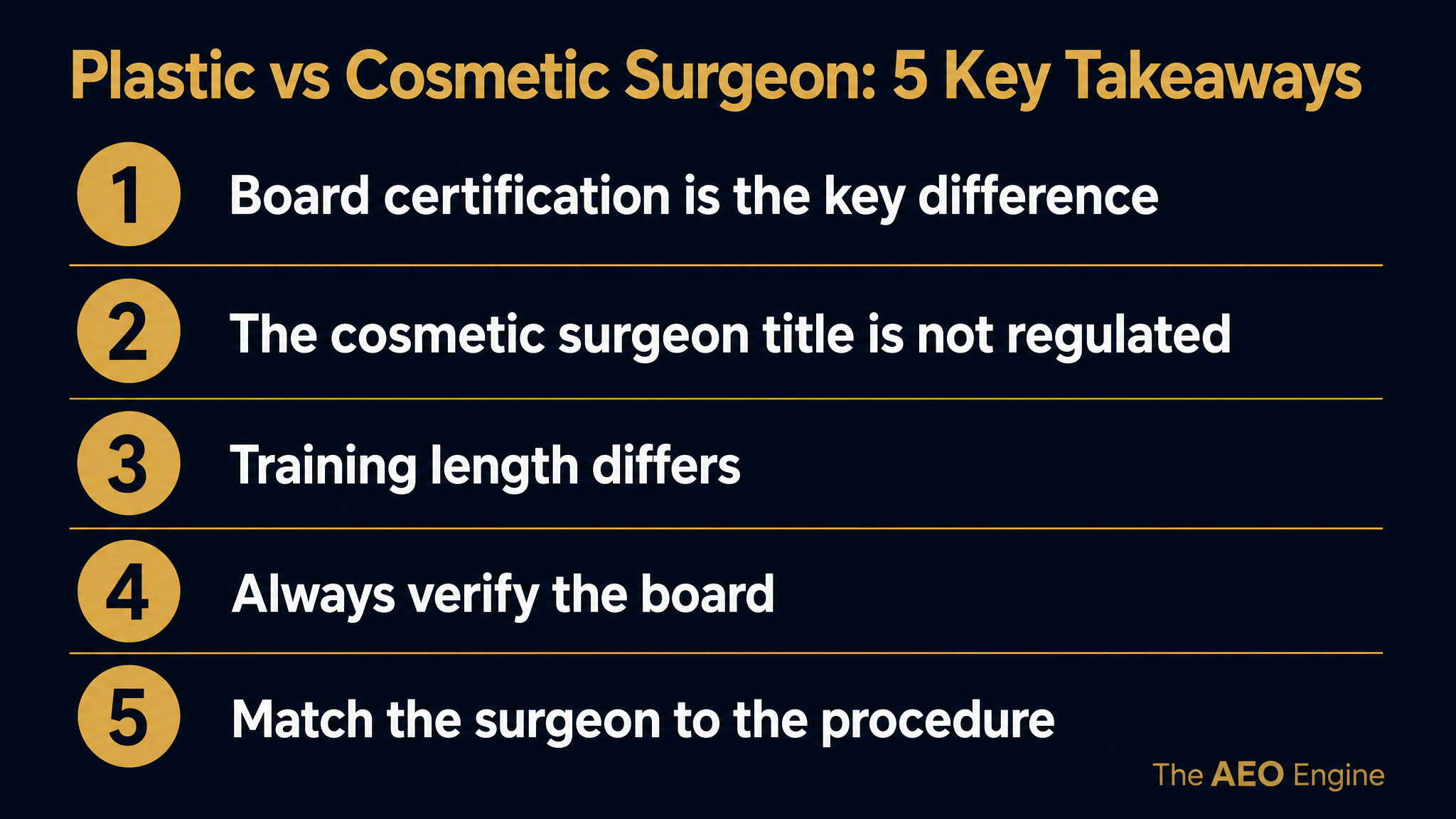
What Is a Plastic Surgeon?
A plastic surgeon is a doctor who completed full surgical training and is certified by the American Board of Plastic Surgery. This board is the only plastic surgery board recognized by the American Board of Medical Specialties. To earn it, a surgeon finishes years of supervised training and passes strict written and oral exams.
That training covers the whole body, from the face to the hands. It also covers safety, anatomy, and how to handle problems in surgery. A board-certified plastic surgeon can perform both cosmetic and reconstructive work. The credential is the clearest sign of this training.
What Is a Cosmetic Surgeon?
A cosmetic surgeon is a doctor who performs cosmetic procedures but may come from many medical backgrounds. The term is not tied to one training path. A dermatologist, an ear-nose-throat doctor, or a general doctor could all use it. Some have deep cosmetic training, while others have very little.
The problem is that the title is not regulated. As the American Society of Plastic Surgeons explains, no law stops a doctor from calling themselves a cosmetic surgeon. So the word alone does not tell you how much surgical training the doctor has. You have to check the exact board and training.
What Are the Key Differences Between Them?
The main difference is the board and the training behind the title. A plastic surgeon holds a specific, recognized credential. A cosmetic surgeon may or may not have the same depth of surgical training. The table below shows the contrast.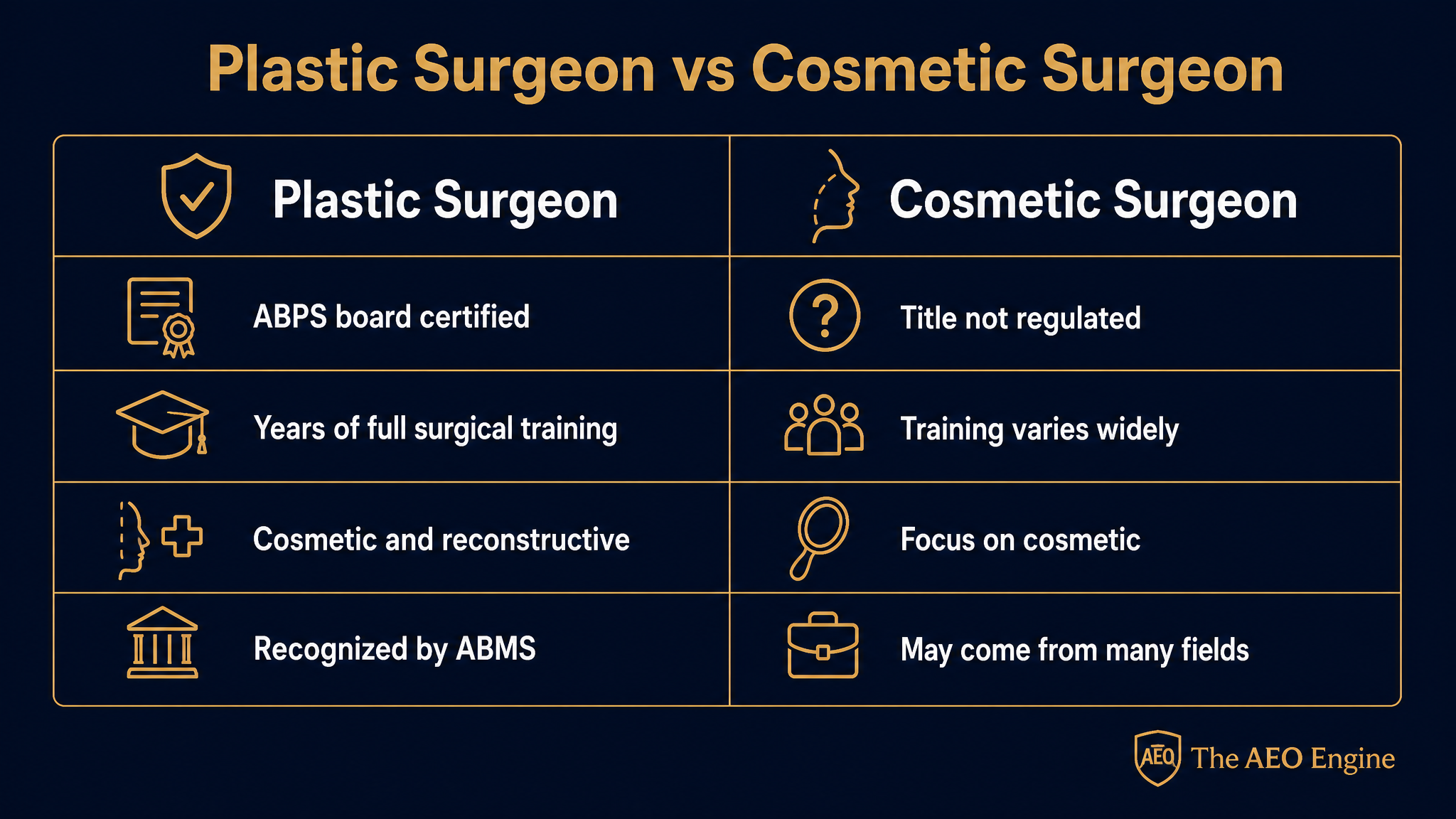
The takeaway is simple. Both can be skilled, but only one title guarantees a set training standard. Always verify the credential, not just the label.
Why Does Board Certification Matter?
Board certification matters because it proves the surgeon met a high training standard. A surgeon certified by the American Board of Plastic Surgery finished years of training and passed strict exams. That lowers your risk and rules out untrained providers.
It is the floor, not the ceiling. Certification does not promise a perfect result. But it confirms real training in surgery and safety. A peer-reviewed study in a plastic surgery journal found that some surgeons market themselves as plastic surgeons without accredited plastic surgery training. That is why the exact board matters so much.
Choosing the right surgeon is the first step. The AEO Engine helps plastic surgery practices get found when patients ask AI for a trusted surgeon. Learn more about AI citation for clinics.
How Do You Verify a Surgeon's Training?
Start by checking the exact board, not just the phrase "board certified." Ask which board certified the surgeon and in what field. A plastic surgeon should name the American Board of Plastic Surgery. You can confirm it through the board's own public tool.
Then look at real experience with your specific procedure. Ask how often the surgeon performs it and to see before-and-after photos of their own patients. Read reviews across more than one site. A surgeon with a clear credential and steady results is a safer choice.
What Are the Red Flags to Avoid?
The biggest red flags are unclear credentials, pressure, and prices far below the local norm. A surgeon who is vague about which board certified them is a serious warning sign. So is one who rushes you to book. A price that seems too good can point to an undertrained provider or a risky setting.
Frequently Asked Questions
Is a Plastic Surgeon the Same as a Cosmetic Surgeon?
No. A plastic surgeon is certified by the American Board of Plastic Surgery after years of surgical training. A cosmetic surgeon may come from a different medical field with varying training. Both can perform cosmetic work, but only the plastic surgeon title points to a set training standard.
Can Type 2 Diabetics Have Plastic Surgery?
Yes, many people with type 2 diabetes can have plastic surgery. The key is good control of blood sugar before and after the procedure. Poorly managed diabetes can slow healing and raise the risk of infection. Tell your surgeon about your diabetes and expect them to work with your doctor on a safe plan.
Is a Cosmetic Surgeon a Real Doctor?
Usually yes, a cosmetic surgeon is a licensed doctor. The issue is that the title does not show which field they trained in. Some have strong surgical training, while others have less. Always ask which board certified them and check their training for your specific procedure.
Which Is Better for a Facelift or Nose Job?
For a facelift or nose job, choose a surgeon with strong facial training and real experience, not just a title. A board-certified plastic surgeon or a trained facial plastic surgeon is a safe place to start. Ask how often they do the procedure and to see their own before-and-after photos.
How Do I Verify a Plastic Surgeon's Board Certification?
You can verify certification through the American Board of Plastic Surgery, which lets patients look up a surgeon's status. Confirm the credential is current and from the correct board. A trustworthy surgeon shares this freely and points you to the right tool.
What Board Certifies Plastic Surgeons?
The American Board of Plastic Surgery certifies plastic surgeons in the United States. It is the only plastic surgery board recognized by the American Board of Medical Specialties. A surgeon with this credential finished years of training and passed strict exams. Be cautious of similar-sounding boards.
Can a Cosmetic Surgeon Perform Surgery Safely?
Many can, but it depends on their training and the setting. Surgery should happen in an accredited facility with proper safety steps. Ask about the surgeon's training, the facility, and what happens if there is a problem. The right training and a safe setting matter more than the title.
How Do I Choose Between a Plastic and Cosmetic Surgeon?
Focus on the credential and real experience, not the label. Confirm the exact board and how often the surgeon does your procedure. Review their own before-and-after photos and read reviews. Then meet them to test their skill and honesty in person.
Executive Summary
A plastic surgeon is a doctor certified by the American Board of Plastic Surgery, while a cosmetic surgeon may come from another medical field with different training. The key difference is the credential and the training behind it. The plastic surgery board is the only one recognized by the American Board of Medical Specialties, and earning it takes years of training and strict exams. The title "cosmetic surgeon" is not regulated, so many kinds of doctors can use it. That means the word alone does not prove surgical training. Both types can be skilled, but only the plastic surgeon title guarantees a set standard. To choose safely, verify the exact board, not just the phrase "board certified." Then look at real experience with your procedure, review before-and-after photos, and read reviews. The biggest red flags are vague credentials, pressure, and prices far below the local norm.
What Should You Do Next?
If you are a patient, confirm a surgeon's exact board and training before you decide. Real results and honest answers are the clearest signs of a safe choice.
If you run a plastic surgery practice, the bigger question is whether patients find you when they ask AI for a surgeon. The AEO Engine offers a free Gap Check that shows where your practice stands in AI answers today. It is built for plastic surgery and other regulated practices that need AI citation more than paid reach.
People Also Read
- What Does AI Look For Before Recommending an Ozempic Clinic Near You?
- How Does AI Decide Which TRT Clinics to Recommend Near You?
About the Author
Jerry Jariwalla is the founder of The AEO Engine and creator of the CITE Framework for Answer Engine Optimization. With over 22 years in digital marketing and multiple successful business exits, Jerry has spent the past two years building AI citation systems for regulated practices in healthcare, wealth management, and legal services. The AEO Engine works exclusively with practices operating under advertising restrictions where AI citation provides higher leverage than traditional paid acquisition.
Expertise: Answer Engine Optimization, AI Citation Strategy, CITE Framework, Regulated Industry Marketing, Healthcare Practice Marketing, Wealth Management Marketing, Legal Marketing
Connect: LinkedIn
Disclaimer: This content is for informational purposes only and does not constitute professional marketing, legal, or compliance advice. Citation rates, timelines, and outcomes vary based on industry, competitive density, and execution quality. Statistics referenced reflect The AEO Engine's tracked client outcomes as of 2026 and are not guarantees of future results. Contact The AEO Engine for a consultation regarding your specific situation.