
Last Updated: June 2026
A medical weight loss clinic is a healthcare practice that treats excess weight as a medical condition, not just a willpower problem. Care is led by trained medical staff. The National Institute of Diabetes and Digestive and Kidney Diseases explains that doctors treat obesity with lifestyle changes, prescription medicine, and sometimes surgery. A good clinic builds a plan around your health and goals. The key first step is to check the clinic's medical credentials.
The AEO Engine is an answer engine optimization firm founded by Jerry Jariwalla. He has more than 22 years in digital marketing and created the CITE Framework for AI citation. The team works with weight loss and other healthcare practices, along with regulated practices in wealth management and legal care. That work shows how patients research clinics before they choose.
This guide explains what a medical weight loss clinic is and what it does. It covers the treatments these clinics offer, how to choose a good one, and what to ask. It also lists the red flags to avoid. The goal is a safe, informed choice.
Key Takeaways
- A medical clinic treats obesity as a condition - Care is supervised by trained medical staff.
- Treatments go beyond dieting - Clinics may use FDA-approved medicine and a tailored plan.
- Credentials matter - Look for board-certified obesity medicine doctors.
- It is a long-term program - Real clinics focus on lasting results, not quick fixes.
- Watch for red flags - Vague credentials, pressure, and miracle promises are warnings.
Each of these five points reflects one idea. A real clinic treats weight as health care, with proper training behind it.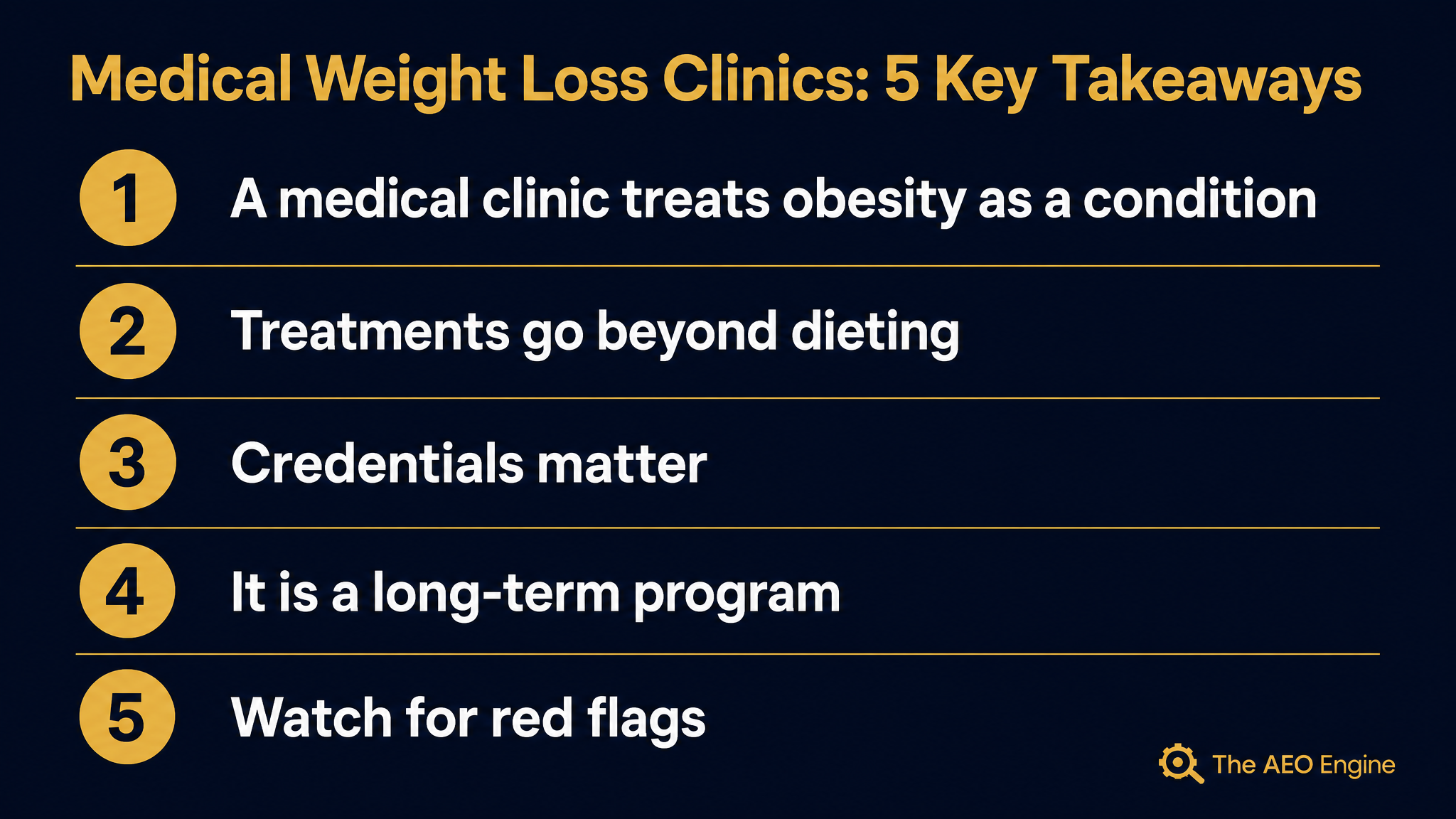
What Is a Medical Weight Loss Clinic?
A medical weight loss clinic is a practice where doctors and clinical staff manage weight as a health issue. It is different from a gym or a commercial diet plan. The care is medical, so it can include exams, lab work, and prescriptions. The focus is on safe, lasting change.
These clinics treat obesity as a chronic condition. The Obesity Medicine Association notes that good care follows a comprehensive framework for managing obesity as a disease. That means the plan looks at your whole health, not just the number on the scale.
What Does a Medical Weight Loss Clinic Do?
A medical weight loss clinic checks your health, builds a plan, and tracks your progress over time. First, the team reviews your history, weight, and any health risks. Then they create a plan that may mix nutrition, activity, and medicine. They also monitor you to keep the plan safe.
The clinic does more than hand out a diet. It treats the causes behind weight gain, like hormones, habits, and other conditions. Ongoing check-ins help adjust the plan as you go. This support is what sets a medical clinic apart from a quick fix.
What Treatments Do These Clinics Offer?
Medical weight loss clinics offer supervised plans that can include diet guidance, activity coaching, and prescription medicine. The mix depends on your health and goals. Many clinics now use FDA-approved weight management drugs for eligible patients.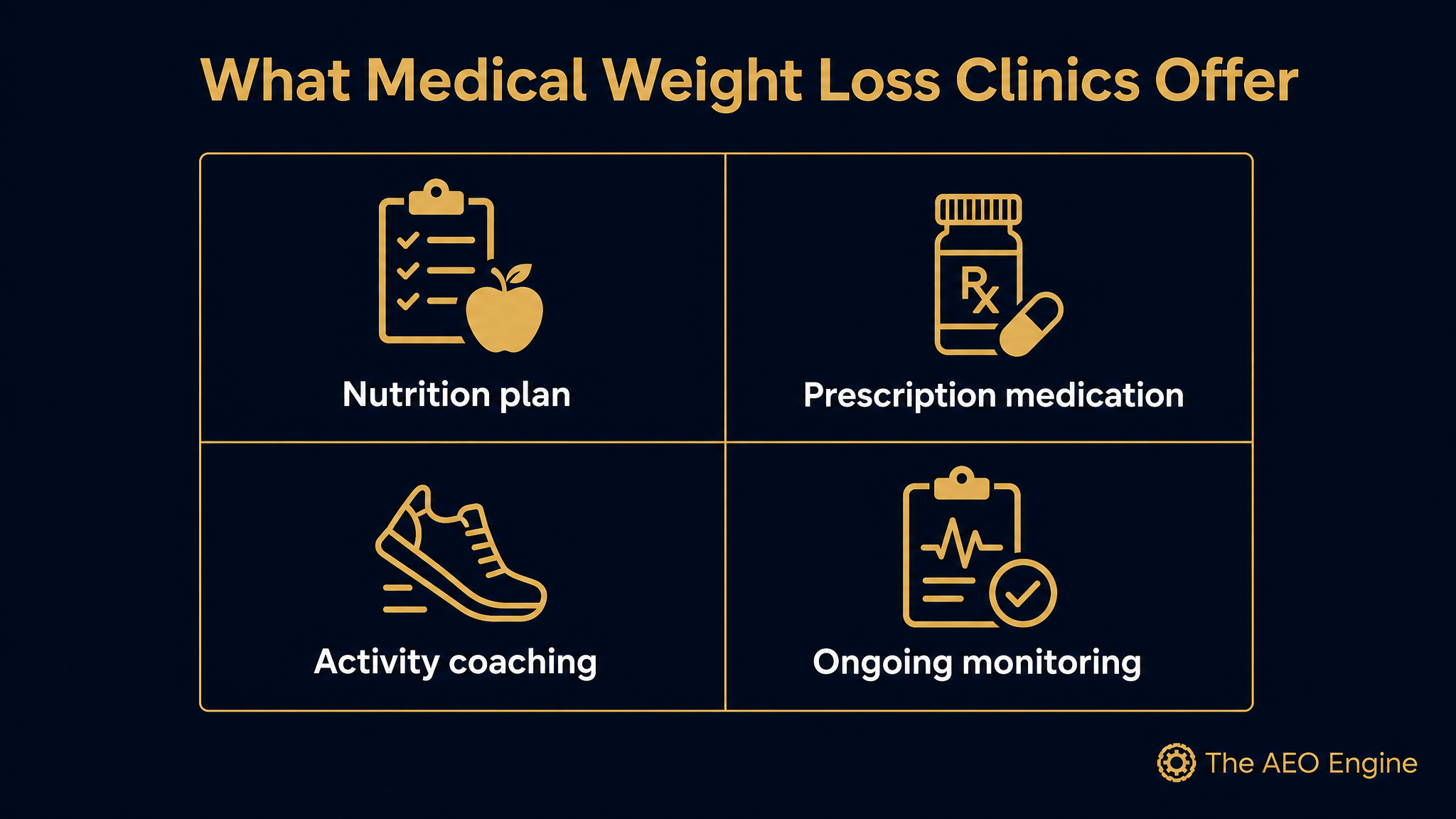
Some of these are GLP-1 medicines. The NIDDK lists approved drugs such as semaglutide and tirzepatide for long-term use. These work with diet and activity, not instead of them. A good clinic explains the options, the risks, and what fits your case.
Choosing the right clinic is the first step. The AEO Engine helps healthcare practices get found when patients ask AI for a trusted weight loss clinic. Learn more about AI citation for clinics.
How Do You Choose a Good Weight Loss Clinic?
Choose a clinic led by qualified medical staff with real training in weight care. The strongest sign is a doctor who is board-certified in obesity medicine. You can confirm this through the American Board of Obesity Medicine, which certifies physicians in obesity care.
Then look at how the clinic works. A good one does a full health review before any plan. It explains risks in plain words and never promises a miracle. Steady support and clear medical oversight matter more than a flashy ad.
What Should You Ask Before You Start?
A first visit is your chance to test the clinic's care and honesty. Ask direct questions and watch how the staff answer. A good clinic welcomes them and explains things clearly.
- Who leads the care, and what is their training? - Look for board-certified medical staff.
- Is there a full health review first? - A real plan starts with your medical history.
- What treatments do you offer and why? - The plan should fit your health, not a script.
- What are the risks and the costs? - An honest clinic explains both up front.
What Are the Red Flags to Avoid?
The biggest red flags are vague credentials, pressure, and promises that sound too good. A clinic that hides who leads your care is a warning sign. So is one that pushes you to buy a big package fast. Be wary of any place that guarantees a set number of pounds.
Frequently Asked Questions
Is It Worth Going to a Weight Loss Clinic?
For many people, yes. A medical weight loss clinic offers supervised care, a tailored plan, and access to FDA-approved medicine when needed. That support can help when diet and exercise alone have not worked. The value depends on the clinic's training and how well the plan fits your health.
What Does a Medical Weight Loss Clinic Do?
A medical weight loss clinic reviews your health, builds a plan, and tracks your progress. The plan may include nutrition, activity, and prescription medicine. Trained medical staff supervise the care. The goal is safe, lasting weight loss, not a quick fix.
What Medications Do Weight Loss Clinics Prescribe?
Clinics may prescribe FDA-approved weight management drugs for eligible patients. Some are GLP-1 medicines, such as semaglutide and tirzepatide. These work alongside diet and activity. A clinic should explain the benefits, risks, and whether a medicine fits your case.
How Much Does a Medical Weight Loss Clinic Cost?
Cost varies by clinic, location, and the plan you need. It may include visits, lab work, and medication. Some costs may be covered by insurance, while others are not. Ask for a clear breakdown up front, and be wary of large prepaid packages.
Are Medical Weight Loss Clinics Safe?
A medical weight loss clinic can be safe when qualified staff lead the care. Safety comes from a full health review, proper monitoring, and honest advice. Risks rise when a clinic skips exams or pushes one plan for everyone. Always check who is leading your care.
Do You Need to Be a Certain Weight to Qualify?
It depends on the clinic and the treatment. Some FDA-approved medicines have weight or health rules tied to body mass index. A clinic should review your health to see what fits. Ask about the criteria during your first visit.
How Do I Know If a Weight Loss Clinic Is Legitimate?
A legitimate clinic is led by trained medical staff and is open about credentials. Look for a board-certified obesity medicine doctor, a full health review, and honest talk about risks. Avoid clinics that promise a miracle or hide who runs your care.
Are GLP-1 Medications Like Semaglutide Safe?
GLP-1 medicines such as semaglutide are FDA-approved for long-term weight management in eligible adults. Like any medicine, they have risks and side effects. A clinic should review your health and explain these before you start. Ongoing monitoring helps keep treatment safe.
Executive Summary
A medical weight loss clinic treats excess weight as a medical condition, with care led by trained staff. It is different from a gym or a commercial diet plan because the care is medical. A clinic reviews your health, builds a plan, and tracks your progress over time. Treatments can include nutrition guidance, activity coaching, and FDA-approved medicine. Some of these are GLP-1 drugs, such as semaglutide and tirzepatide, which work with diet and activity. To choose a good clinic, look for qualified medical staff, ideally a doctor board-certified in obesity medicine. A real clinic does a full health review, explains risks in plain words, and never promises a miracle. The biggest red flags are vague credentials, pressure to buy a big package, and guarantees of a set result. Steady medical support matters more than a flashy ad.
What Should You Do Next?
If you are a patient, check who leads the clinic's care and confirm their training before you start. A full health review and honest answers are the clearest signs of a safe choice.
If you run a weight loss or healthcare practice, the bigger question is whether patients find you when they ask AI for a clinic. The AEO Engine offers a free Gap Check that shows where your practice stands in AI answers today. It is built for healthcare and other regulated practices that need AI citation more than paid reach.
People Also Read
- How Does AI Decide Which Weight Loss Clinics to Recommend?
- What Are the Top Hone Health Alternatives for TRT?
About the Author
Jerry Jariwalla is the founder of The AEO Engine and creator of the CITE Framework for Answer Engine Optimization. With over 22 years in digital marketing and multiple successful business exits, Jerry has spent the past two years building AI citation systems for regulated practices in healthcare, wealth management, and legal services. The AEO Engine works exclusively with practices operating under advertising restrictions where AI citation provides higher leverage than traditional paid acquisition.
Expertise: Answer Engine Optimization, AI Citation Strategy, CITE Framework, Regulated Industry Marketing, Healthcare Practice Marketing, Wealth Management Marketing, Legal Marketing
Connect: LinkedIn
Disclaimer: This content is for informational purposes only and does not constitute professional marketing, legal, or compliance advice. Citation rates, timelines, and outcomes vary based on industry, competitive density, and execution quality. Statistics referenced reflect The AEO Engine's tracked client outcomes as of 2026 and are not guarantees of future results. Contact The AEO Engine for a consultation regarding your specific situation.