
Last Updated: June 2026
Insurance often covers testosterone replacement therapy when it is medically necessary for diagnosed low testosterone, but usually not for anti-aging or lifestyle use. The key is a real diagnosis. Medicare's coverage rules only pay for TRT when it is reasonable and necessary for a true hormone disorder, not normal aging. Private plans work in a similar way. So coverage usually comes down to your diagnosis and your documentation.
The AEO Engine is an answer engine optimization firm founded by Jerry Jariwalla. He has more than 22 years in digital marketing and created the CITE Framework for AI citation. The team works with hormone health and other healthcare practices, along with regulated practices in wealth management and legal care. That work shows how patients research treatments and costs before they choose.
This guide explains when insurance pays for TRT and what it usually will not cover. It covers costs without insurance, how to get covered, and Medicare rules. The goal is a clear view of coverage, not medical or insurance advice.
Key Takeaways
- Coverage depends on medical necessity - Insurers cover TRT for diagnosed low testosterone.
- Anti-aging use is rarely covered - Lifestyle or wellness TRT is usually out of pocket.
- Records are required - Expect symptoms plus repeated low blood tests.
- Medicare can cover TRT - But only when it is medically necessary.
- Costs vary without insurance - The form and dose change the price.
Each of these five points reflects one idea. Insurance pays for TRT as medical care, not as a wellness choice.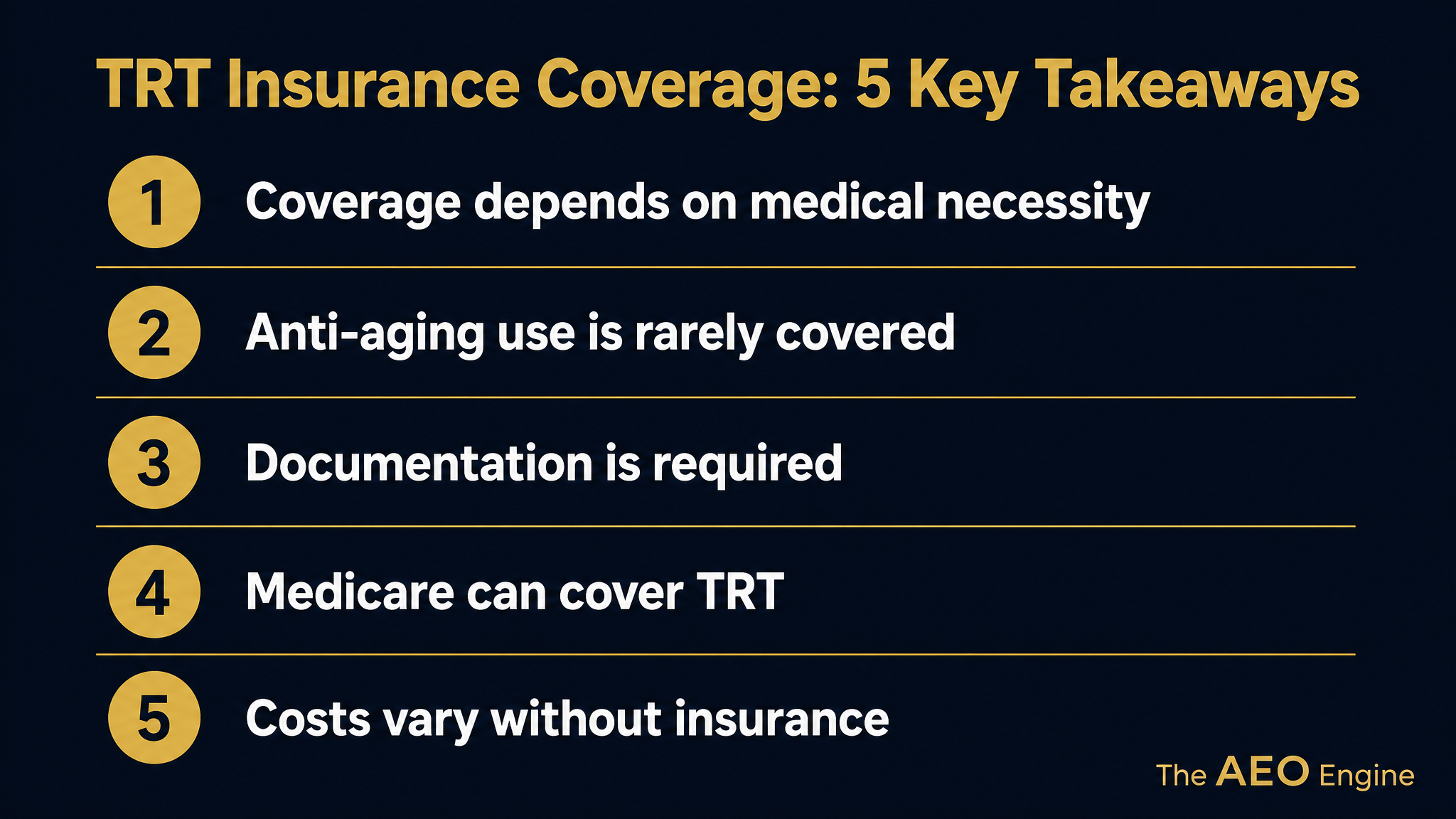
Does Insurance Cover TRT?
Insurance often covers TRT, but only when it is medically necessary. That means a real diagnosis of low testosterone, called hypogonadism. Most plans need proof of symptoms and low blood test results. With that proof, coverage is common.
Without a clear diagnosis, coverage is unlikely. Plans treat TRT for aging or wellness as a choice, not a need. In those cases, you usually pay on your own. The diagnosis is what changes the answer.
When Will Insurance Pay for TRT?
Insurance pays for TRT when the records show medical need. A provider must record symptoms and confirm low testosterone. Plans want more than one low blood test. Cleveland Clinic notes that a diagnosis needs both symptoms and low levels on testing. The table below shows what is usually covered and what is not.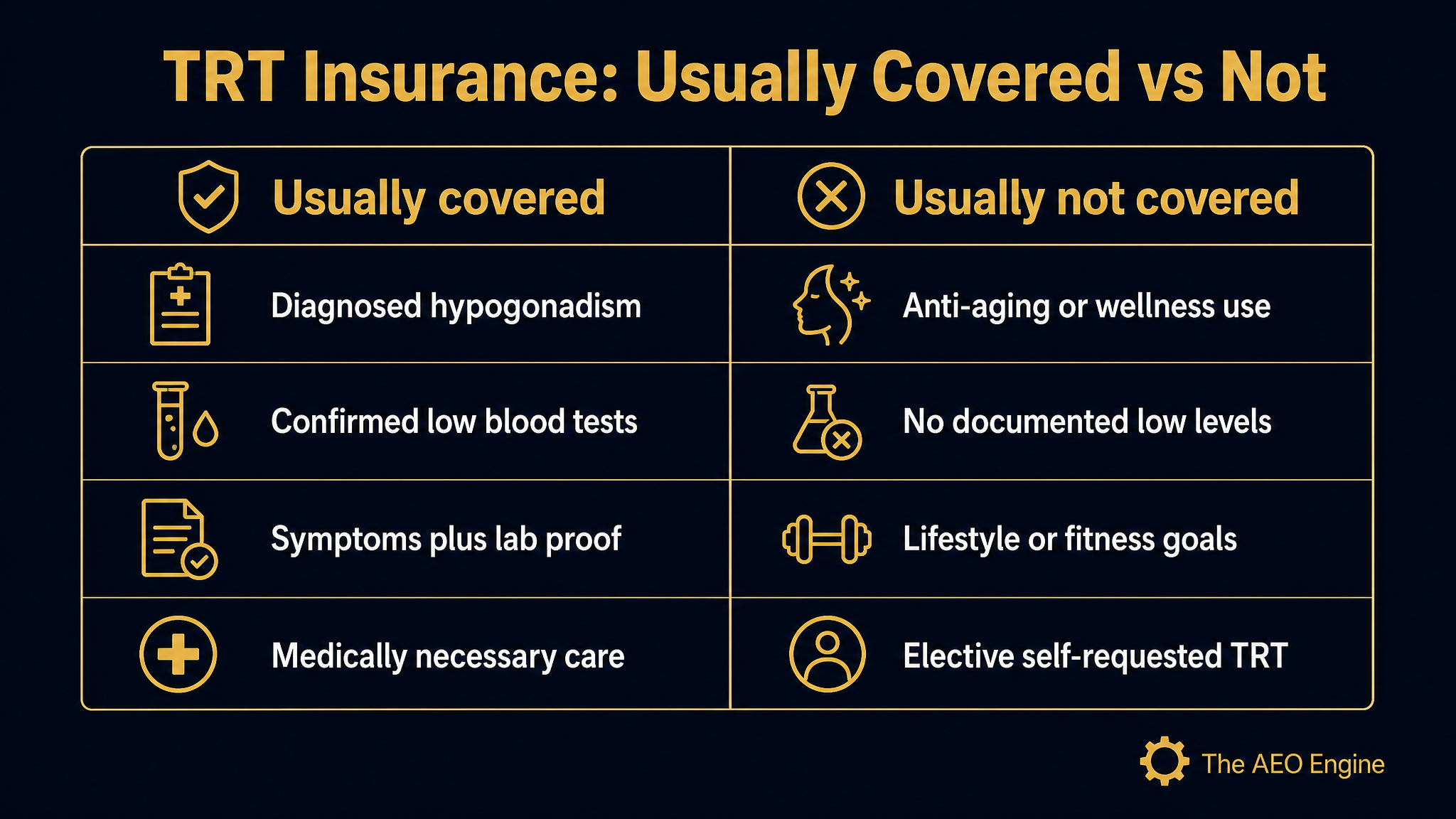
The pattern is clear. Coverage follows medical need. The stronger your diagnosis and records, the better your odds.
What Does Insurance Usually Not Cover?
Insurance usually will not cover TRT used for anti-aging or performance. Harvard Health notes that TRT suits men with a documented deficiency, while use for aging alone is not well supported. Plans follow that logic.
So if a man has normal testosterone and wants TRT for energy or muscle, that is elective. Most insurers will deny it. The same is true for treatment with no blood test proof. These cases usually fall to out-of-pocket cost.
How Much Does TRT Cost Without Insurance?
The cost of TRT without insurance varies by the form, the dose, and the pharmacy. Injections are often the lowest-cost option. Gels and patches can cost more. Brand-name products usually cost more than generics.
There is no single price for everyone. Costs also include the visits and the blood tests needed to monitor care. Ask the clinic and pharmacy for a clear breakdown before you start. That helps you compare options and avoid surprises.
Choosing the right care is the first step. The AEO Engine helps healthcare practices get found when patients ask AI about treatment and cost. Learn more about AI citation for clinics.
How Do You Get TRT Covered by Insurance?
To get TRT covered, start with a proper diagnosis and strong documentation. The first step is a visit where the provider records your symptoms. The next is blood testing that confirms low testosterone, usually on more than one morning test.
- Get a real diagnosis - A provider must document symptoms and low levels.
- Confirm with blood tests - Plans want repeated low results, often morning draws.
- Ask about prior authorization - Many plans require approval before they pay.
- Keep your records - Save lab results and notes in case of an appeal.
Does Medicare Cover TRT?
Medicare can cover TRT, but only when it is medically necessary. Coverage rules pay for testosterone treatment for diagnosed hormone disorders like symptomatic hypogonadism. They exclude treatment for normal age-related decline alone.
Gels you apply yourself often fall under Part D. Some shots fall under Part B. The plan still needs proof of medical need. As with private insurance, the diagnosis and documentation drive the decision.
Frequently Asked Questions
How Do I Get Testosterone Covered by Insurance?
Start with a provider who documents your symptoms and confirms low testosterone with blood tests. Most plans want repeated low results, often from morning draws. Ask whether prior authorization is needed. Keep all records in case you need to appeal a denial.
How Much Do 3 Months of Testosterone Cost?
The cost varies by form, dose, and pharmacy, so there is no single price. Injections are often the lowest-cost option, while gels and patches cost more. The total also includes visits and monitoring tests. Ask your pharmacy and insurer for a clear breakdown.
Can Taking Testosterone Raise Your PSA?
Yes, testosterone can raise PSA, a marker linked to the prostate. This is why a baseline PSA test and regular checks are part of safe TRT. A sharp rise prompts a closer look. Men with prostate cancer should not take TRT.
Does Insurance Cover TRT for Low Testosterone?
Usually yes, when low testosterone is diagnosed and documented. Plans want symptoms plus repeated low blood tests to confirm medical need. With that proof, coverage is common. Without it, the plan may treat TRT as elective.
Why Would Insurance Deny TRT?
Insurance often denies TRT when there is no clear diagnosis or lab proof. It also denies treatment used for anti-aging, wellness, or performance. Missing prior authorization is another common reason. A strong record of symptoms and low levels helps prevent denials.
Does Medicare Cover Testosterone Replacement Therapy?
Medicare can cover TRT when it is medically necessary for a diagnosed hormone disorder. It does not cover treatment for normal aging alone. Coverage may fall under Part B or Part D depending on the form. Documentation of medical need is required.
Is a Prior Authorization Needed for TRT?
Often yes. Many plans require prior authorization before they pay for TRT. That means your provider sends proof of diagnosis and low blood tests for approval. Ask your plan early so there are no delays. Keep copies of everything submitted.
Does Insurance Cover Testosterone for Anti-Aging?
Usually no. Insurers treat testosterone for anti-aging or general wellness as elective. Without a diagnosis of low testosterone, most plans will not pay. In these cases, men typically cover the cost out of pocket.
Executive Summary
Insurance often covers testosterone replacement therapy when it is medically necessary for diagnosed low testosterone, but usually not for anti-aging or lifestyle use. The deciding factor is a real diagnosis of hypogonadism, confirmed with symptoms and repeated low blood tests. With strong documentation, coverage is common under both private plans and Medicare. Medicare pays for TRT only when it is reasonable and necessary for a true hormone disorder, not normal aging, and coverage may fall under Part B or Part D depending on the form. Insurers usually deny TRT used for energy, muscle, or general wellness, and they often require prior authorization. Without insurance, the cost varies by the form, dose, and pharmacy, with injections often the lowest-cost option and gels costing more. To improve your odds of coverage, get a proper diagnosis, confirm low testosterone with blood tests, ask about prior authorization, and keep your records for any appeal.
What Should You Do Next?
If you are seeking TRT, ask your provider to document a clear diagnosis and confirm low testosterone before you file a claim. Knowing your plan's rules and keeping records are the best ways to get covered. This guide is information, not medical or insurance advice, so check with your provider and plan.
If you run a hormone health or healthcare practice, the bigger question is whether patients find you when they ask AI about TRT and insurance. The AEO Engine offers a free Gap Check that shows where your practice stands in AI answers today. It is built for healthcare and other regulated practices that need AI citation more than paid reach.
People Also Read
- How Does AI Sort Real GLP-1 Telehealth Clinics From Marketing?
- How Does AI Decide Which Online TRT Clinics to Recommend?
About the Author
Jerry Jariwalla is the founder of The AEO Engine and creator of the CITE Framework for Answer Engine Optimization. With over 22 years in digital marketing and multiple successful business exits, Jerry has spent the past two years building AI citation systems for regulated practices in healthcare, wealth management, and legal services. The AEO Engine works exclusively with practices operating under advertising restrictions where AI citation provides higher leverage than traditional paid acquisition.
Expertise: Answer Engine Optimization, AI Citation Strategy, CITE Framework, Regulated Industry Marketing, Healthcare Practice Marketing, Wealth Management Marketing, Legal Marketing
Connect: LinkedIn
Disclaimer: This content is for informational purposes only and does not constitute professional marketing, legal, or compliance advice. Citation rates, timelines, and outcomes vary based on industry, competitive density, and execution quality. Statistics referenced reflect The AEO Engine's tracked client outcomes as of 2026 and are not guarantees of future results. Contact The AEO Engine for a consultation regarding your specific situation.