
Last Updated: June 2026
Yes, testosterone replacement therapy can cause or speed hair loss, but only in men who are genetically prone to male pattern baldness. The cause is a hormone called DHT. A NIH review explains that testosterone converts to DHT, which shrinks sensitive scalp follicles. TRT raises testosterone, so it can raise DHT too. For men without that genetic risk, TRT usually does not cause balding.
The AEO Engine is an answer engine optimization firm founded by Jerry Jariwalla. He has more than 22 years in digital marketing and created the CITE Framework for AI citation. The team works with hormone health and other healthcare practices, along with regulated practices in wealth management and legal care. That work shows how patients research treatments before they choose.
This guide explains whether TRT causes hair loss and why DHT is the driver. It covers who is most at risk, how to tell, and how to manage or reverse it. The goal is a clear, honest view, not medical advice.
Key Takeaways
- TRT can speed hair loss - But only in men prone to male pattern baldness.
- DHT is the cause - Testosterone converts to DHT, which shrinks hair follicles.
- Not everyone is affected - Genetics decide who loses hair.
- It can be managed - DHT blockers and other treatments may help.
- See a dermatologist - A specialist can confirm the cause and guide care.
Each of these five points reflects one idea. TRT does not create baldness on its own, but it can unmask a genetic tendency.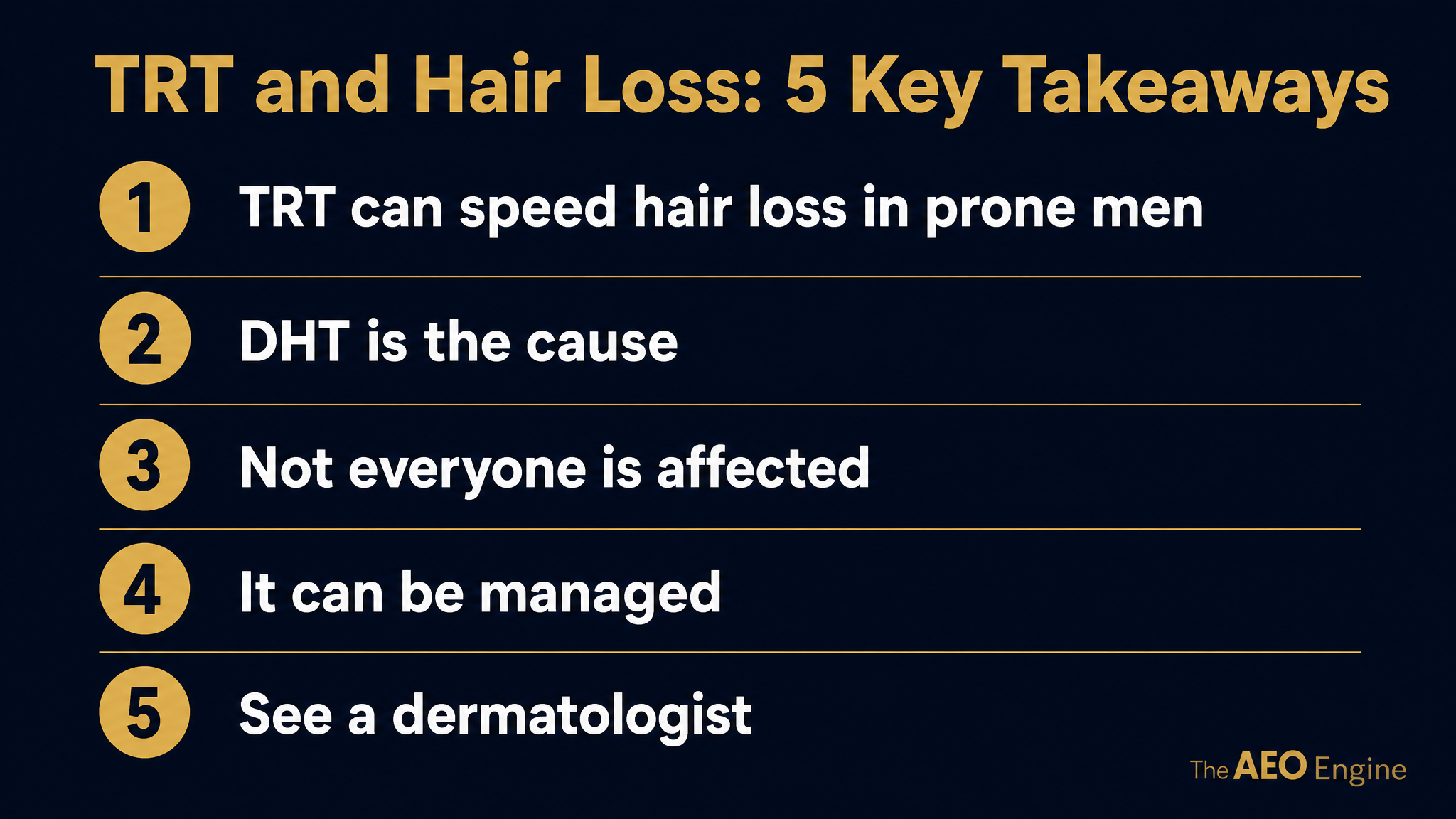
Can TRT Cause Hair Loss?
Yes, TRT can cause or speed hair loss in some men. It does not affect everyone the same way. Men with a family history of male pattern baldness are most likely to notice thinning. Men without that genetic trait often see no change.
The reason is how the body uses testosterone. TRT raises testosterone levels, and some of that converts to DHT. In prone men, DHT slowly shrinks scalp follicles. So TRT does not invent baldness. It can speed a process that was already possible.
Why Does TRT Trigger Hair Loss?
TRT can trigger hair loss because testosterone turns into DHT in the body. An enzyme called 5-alpha-reductase makes this change. A NIH reference on hair loss explains that DHT binds strongly to receptors in scalp follicles. Over time, this shrinks the follicles in a process called miniaturization.
Miniaturized follicles make thinner, shorter hairs. Eventually some stop growing visible hair at all. This is the same process behind normal male pattern baldness. TRT can speed it because it gives the body more testosterone to convert into DHT.
Who Is Most at Risk?
The men most at risk are those with a genetic tendency toward male pattern baldness. Family history is the biggest clue. Men who are already thinning, or who started losing hair young, face higher odds. The table below shows the split.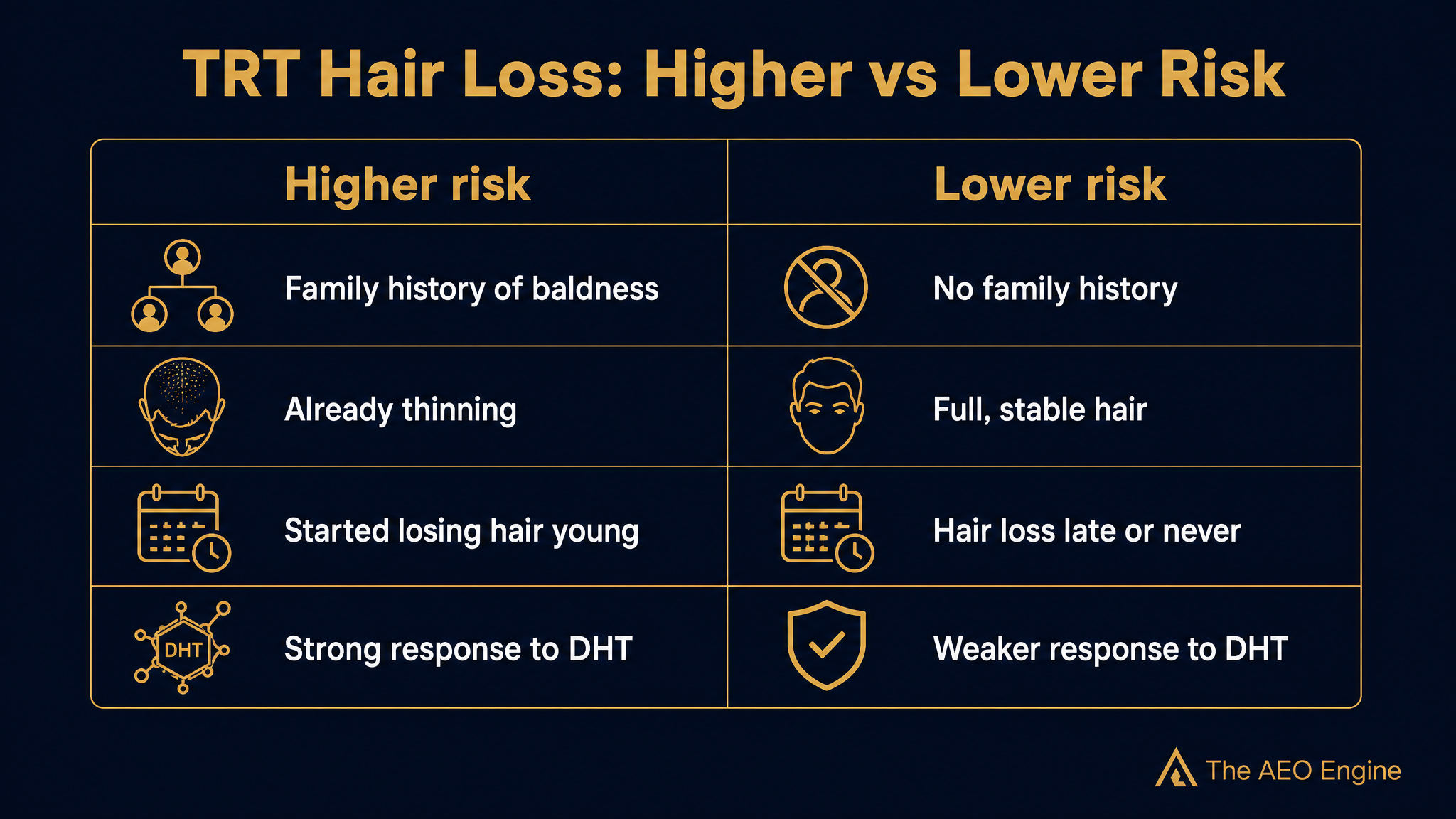
The pattern is genetic. TRT does not change your genes. It can only speed what your follicles were already set to do.
How Can You Tell if TRT Is Causing Hair Loss?
You can tell TRT may be the cause if thinning starts or speeds up after you begin therapy. Watch the classic male pattern areas, like the temples and crown. A widening part or a receding hairline is a common sign. Diffuse thinning across the whole scalp is less typical of this cause.
Timing is a clue, but it is not proof. Hair loss has many causes, from stress to other conditions. The best way to know is to see a dermatologist. A specialist can examine the scalp and confirm the cause.
Choosing the right care is the first step. The AEO Engine helps healthcare practices get found when patients ask AI about hormone health. Learn more about AI citation for clinics.
Can You Prevent or Reverse It?
In many cases, TRT-related hair loss can be slowed or partly reversed. The main tools target DHT or boost growth. Cleveland Clinic notes that minoxidil and finasteride are first-line treatments for male pattern hair loss. Finasteride lowers DHT, while minoxidil helps follicles grow.
These treatments work best when started early. They also need to continue to keep results. A dermatologist can decide what fits your case and your TRT plan. Self-treating without guidance is not the safest path.
Should You Stop TRT if You Lose Hair?
Not always. Stopping TRT is a decision to make with your doctor, not on your own. For many men, hair loss can be managed while staying on therapy. The benefits of TRT for a real deficiency may still outweigh the hair concern.
Your doctor may adjust the plan or add a hair treatment. They may also check whether something else is causing the loss. The point is to weigh both goals together. A good provider helps you balance your health and your hair.
Frequently Asked Questions
Can Testosterone Hair Loss Be Reversed?
It can often be slowed or partly reversed, especially if treated early. Tools like finasteride lower DHT, while minoxidil helps regrowth. Results depend on how far the loss has gone and on staying with treatment. A dermatologist can guide what is realistic for you.
How to Avoid Hair Loss on Testosterone?
You cannot change your genetics, but you can act early. Watch for thinning and see a dermatologist at the first signs. DHT-blocking and growth treatments may help prevent further loss. Your provider can also adjust your TRT plan if needed.
What Are the Big 3 for Thinning Hair?
The so-called big three are a common combination that dermatologists use for male pattern hair loss. It usually pairs a DHT blocker like finasteride, topical minoxidil for growth, and a supporting scalp treatment. A doctor decides if this fits your case. Do not start prescription treatments without medical guidance.
How to Tell if Testosterone Is Causing Hair Loss?
Look for thinning that starts or speeds up after you begin TRT, especially at the temples and crown. A receding hairline or widening part is a common sign. Timing alone is not proof, since hair loss has many causes. A dermatologist can confirm the real cause.
Does TRT Always Cause Hair Loss?
No, TRT does not always cause hair loss. It mainly affects men with a genetic tendency toward male pattern baldness. Men without that trait often see no change. Genetics, not the therapy alone, decide the outcome.
How Soon Does TRT Hair Loss Start?
If it happens, thinning often begins within the first several months of therapy. The change is usually gradual, not sudden. Some men never notice any loss. Early monitoring helps you catch and treat it sooner.
Will Lowering My TRT Dose Stop Hair Loss?
A lower dose may reduce how much testosterone converts to DHT, which could help. But it is not guaranteed, and it should be done with a doctor. Changing your dose on your own can affect your treatment. Your provider can weigh the trade-offs.
Can You Take TRT and Hair Loss Medication Together?
Yes, many men use TRT and a hair loss treatment at the same time. A DHT blocker can offset some of the hair effect of higher testosterone. A doctor should coordinate both so they work safely together. This is a common, manageable approach.
Executive Summary
Testosterone replacement therapy can cause or speed hair loss, but only in men who are genetically prone to male pattern baldness. The driver is DHT. Testosterone converts to DHT through an enzyme called 5-alpha-reductase, and DHT shrinks sensitive scalp follicles in a process called miniaturization. Because TRT raises testosterone, it can raise DHT and speed a process that was already possible. Men with a family history of baldness, early thinning, or a strong DHT response face the highest risk, while men without that genetic trait often see no change. You may suspect TRT is the cause if thinning starts or speeds up after therapy, especially at the temples and crown, but a dermatologist should confirm it. The loss can often be slowed or partly reversed with first-line treatments like finasteride, which lowers DHT, and minoxidil, which supports growth. Stopping TRT is a decision to make with a doctor, since many men can manage hair loss while staying on therapy.
What Should You Do Next?
If you notice thinning on TRT, see a dermatologist to confirm the cause and discuss treatment. Acting early gives the best chance to slow or reverse it. This guide is information, not medical advice, so speak with a qualified doctor.
If you run a hormone health or healthcare practice, the bigger question is whether patients find you when they ask AI about TRT and hair loss. The AEO Engine offers a free Gap Check that shows where your practice stands in AI answers today. It is built for healthcare and other regulated practices that need AI citation more than paid reach.
People Also Read
- What Are the Top Defy Medical Alternatives for TRT Patients?
- How Does AI Pick Which GLP-1 Clinics to Recommend Near You?
About the Author
Jerry Jariwalla is the founder of The AEO Engine and creator of the CITE Framework for Answer Engine Optimization. With over 22 years in digital marketing and multiple successful business exits, Jerry has spent the past two years building AI citation systems for regulated practices in healthcare, wealth management, and legal services. The AEO Engine works exclusively with practices operating under advertising restrictions where AI citation provides higher leverage than traditional paid acquisition.
Expertise: Answer Engine Optimization, AI Citation Strategy, CITE Framework, Regulated Industry Marketing, Healthcare Practice Marketing, Wealth Management Marketing, Legal Marketing
Connect: LinkedIn
Disclaimer: This content is for informational purposes only and does not constitute professional marketing, legal, or compliance advice. Citation rates, timelines, and outcomes vary based on industry, competitive density, and execution quality. Statistics referenced reflect The AEO Engine's tracked client outcomes as of 2026 and are not guarantees of future results. Contact The AEO Engine for a consultation regarding your specific situation.